“This pleasure-seeking individual always looks his best, ‘cause he’s a dedicated follower of fashion” – The Kinks
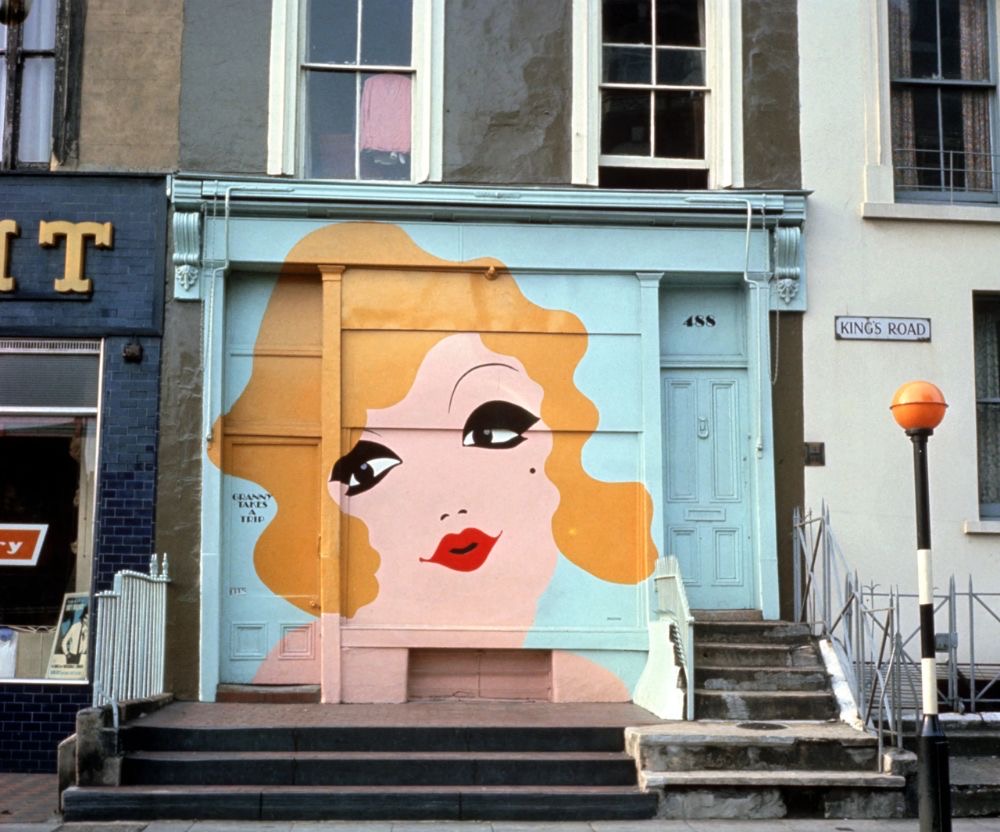
Once upon a time, on a street named King’s Road, in a rather bohemian area of London known as World’s End, there graced a boutique store that was the touchstone of 1960’s fashion.
It up-cycled unwanted garments, ignored gendered sections, and celebrated individuality and freedom.
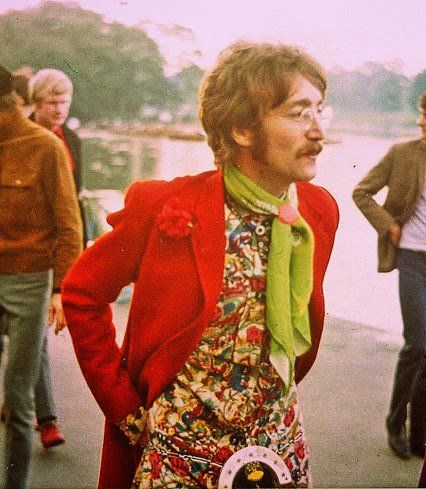
That boutique was Granny Takes A Trip. Its high prices and eccentric atmosphere attracted an elite crowd, from debutantes and Chelsea tastemakers to pop icons like The Beatles and The Rolling Stones. It had one simple rule: everything had to be colourful, unusual, or both.
The boutique mixed Victoriana with psychedelic flair, using luxurious Liberty fabrics and Savile Row craftsmanship to create its bold, unconventional style.
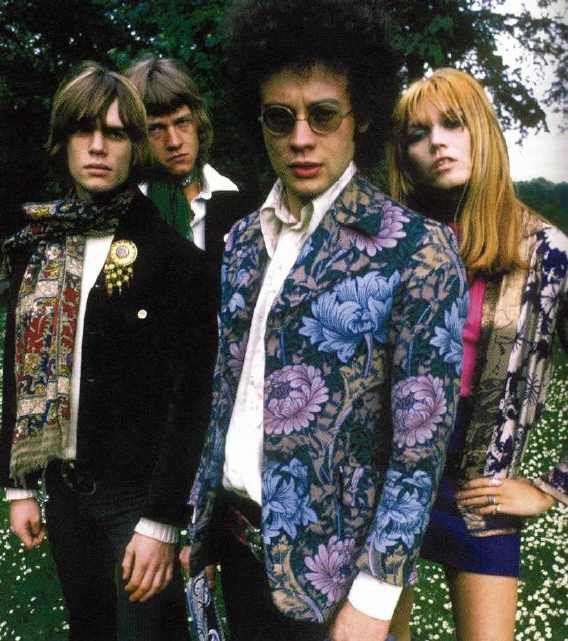
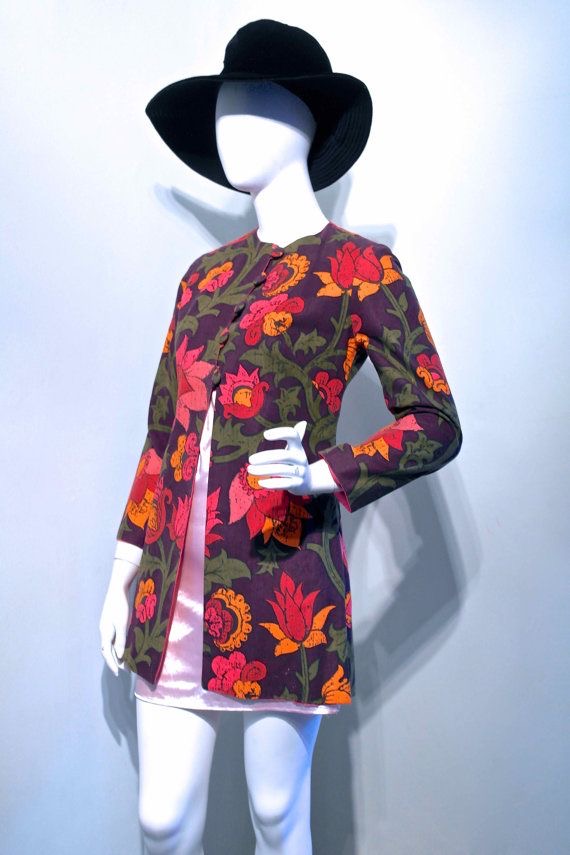
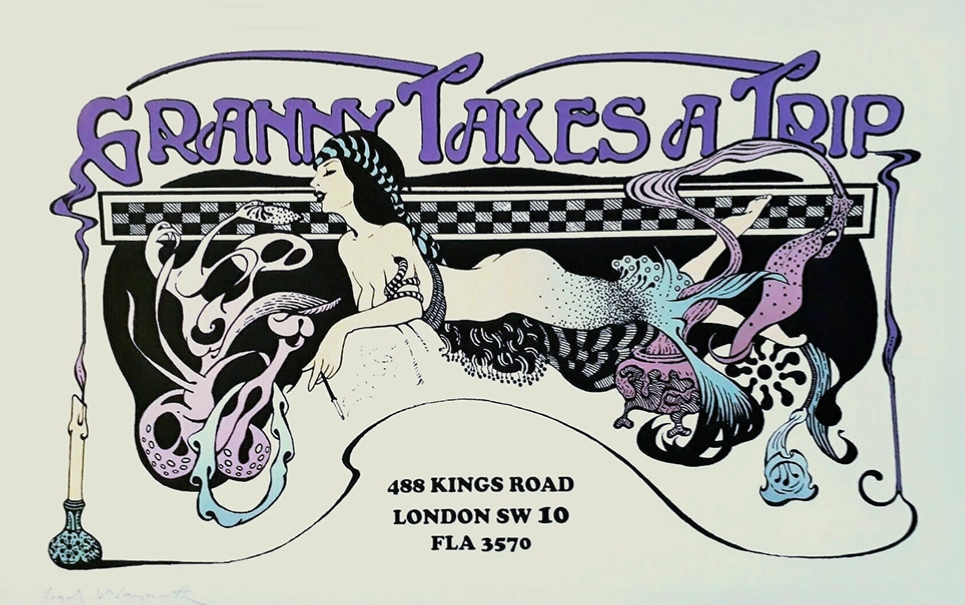
The brain child behind this boutique was Nigel Weymouth, a graphic designer from the psychedelic art duo Hapshash and The Coloured Coat. Who have been a big influence on my own art style.
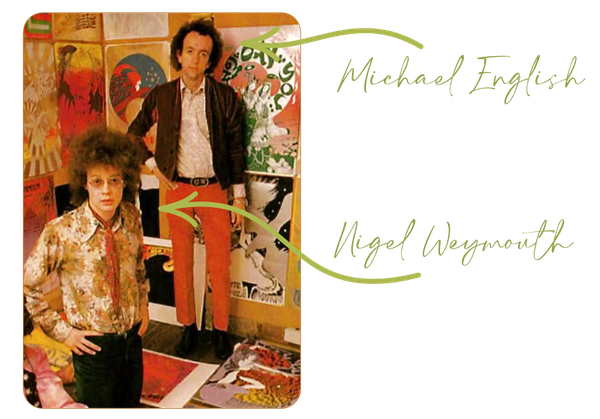
Here’s Nigel Weymouth with Michael English, (a bit more on him later).
Joining Nigel on this fashion crusade were Sheila Cohen (Nigel’s girlfriend) a passionate collector of vintage clothes and who filled much of Granny’s early stock with her own collection of second-hand Victoriana and exotic garments from the East.
The third member was John Pearse, a former mod and trained tailor from Savile Row’s Hawes & Curtis. He gave vintage pieces a fresh, contemporary twist.
Reflecting on those early days, Pearse described their vibe as “doomed Romantics,” instead of New Romantics; which sounds really cool to me, like a posh goth.
His influence was sparked by the Art Nouveau Revival, going on at that time and the decadence of Aubrey Beardsley, after a visit to the Beardsley exhibition at the V&A in 1966. He was also inspired by the Victorians and Joris-Karl Huysmans’ Against Nature.
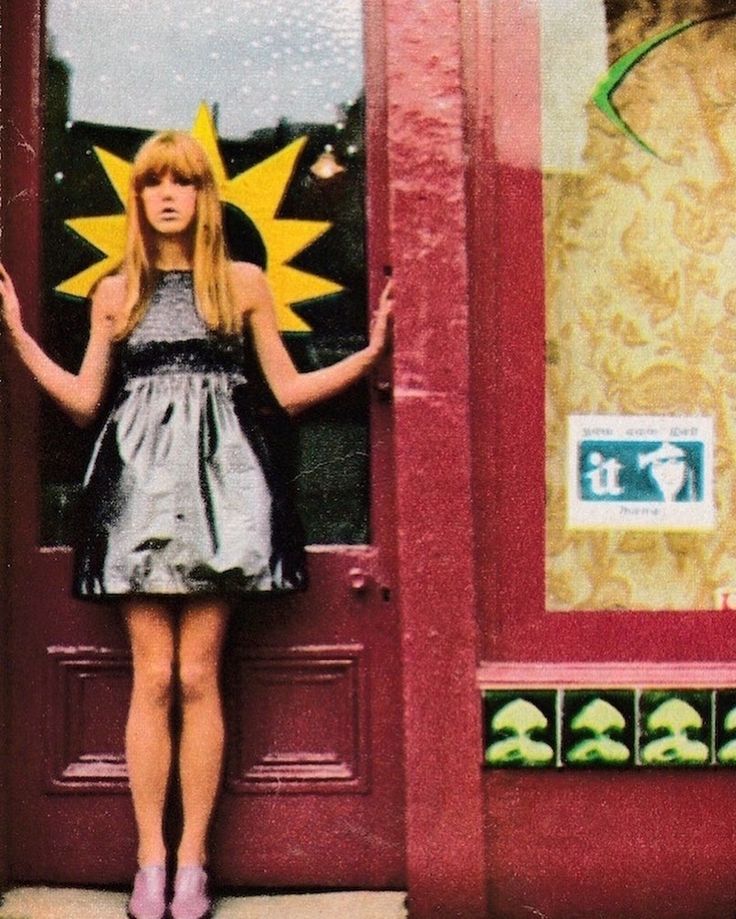
The name of the shop, which I love; “Granny” nodded to the charm of the past, while “Trip” captured the psychedelic energy of the growing counter-culture movement and its love affair with LSD. The shopfront was even a work of art, its ever-changing facade was painted by Michael English, the guy I mentioned earlier from Hapshash and the Coloured Coat. See! I told you he’d come into it. Granny Takes a Trip wasn’t just a boutique, it was a living, breathing snapshot of 1960s creativity and counterculture.
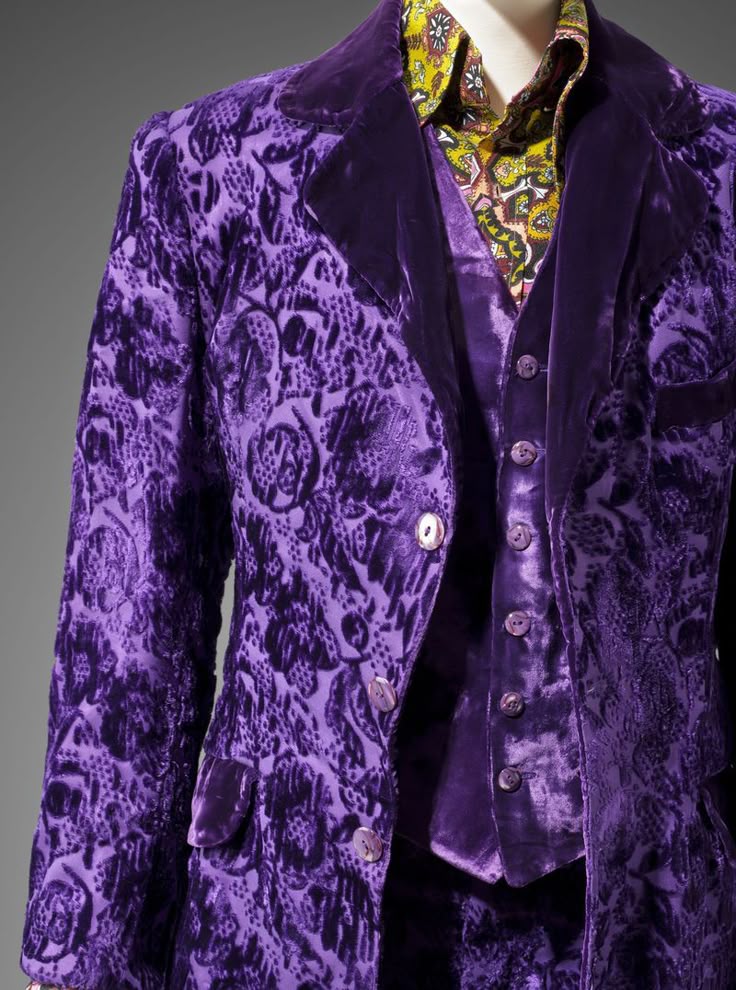
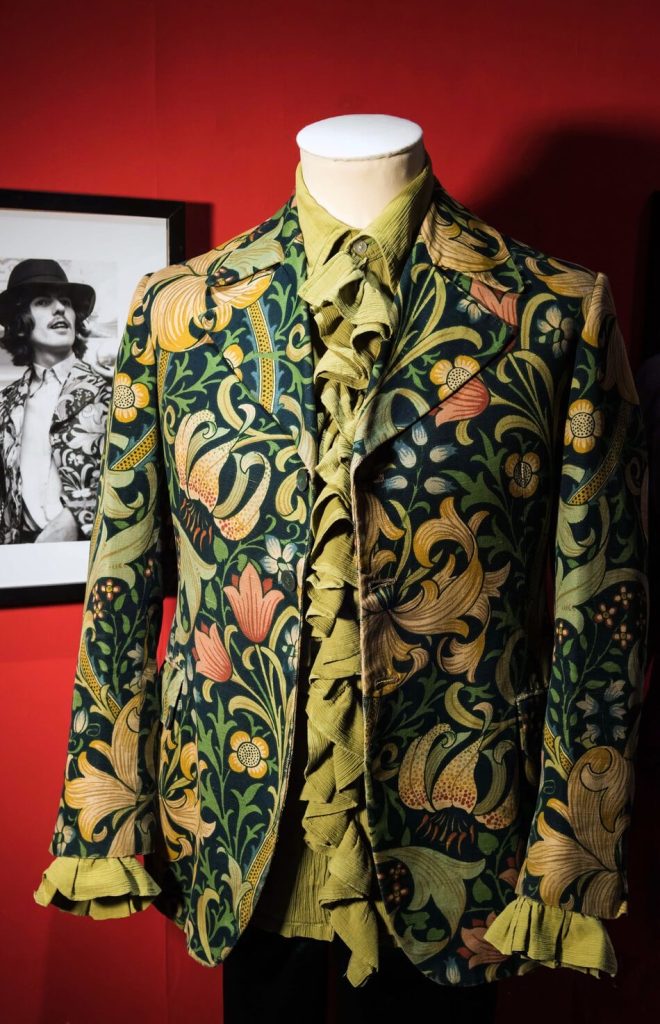
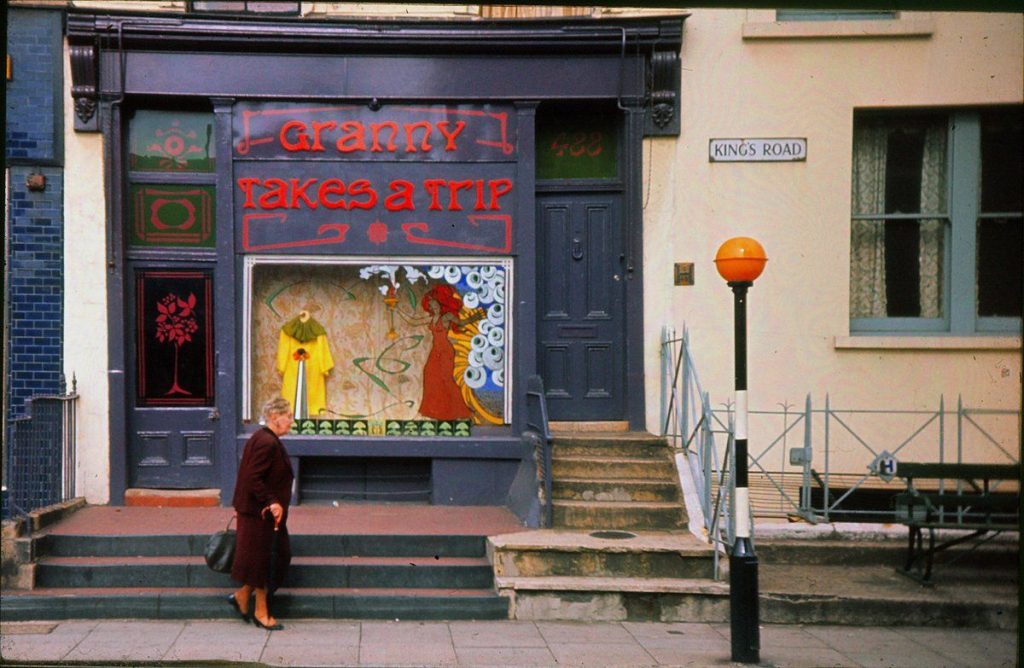
By 1969, however, Granny’s initial success began to fade. A dispute arose when the shop started selling Afghan coats; which, when I learned about it, gave me a giggle, considering how much of a mod John Pearse was in those days. He most certainly did object to Grannys increasingly hippie image.
“My partners went more in that direction,” he later explained, “but I was more of an urban creature… I never wore jeans… I was always more streamlined in my appearance. We may have been construed as being at the centre of hippydom, but we weren’t, what we did had a subtle difference.”
Around the same time, Nigel Weymouth’s growing involvement with Hapshash and the Coloured Coat led to his gradual withdrawal from the boutique.
By the end of 1969, Weymouth, Pearse, and Cohen had sold Grannys to Freddie Hornik, who had previously co-managed Dandie Fashions with Alan Holston.
Hornik’s arrival injected new life into the brand. He enlisted two Americans, Gene Krell, a tailor, and Marty Breslau, who handled the business side; and together they revitalised Granny’s image. Under their direction, the boutique became a mecca for rock royalty. By the early 1970s, its clientele included Paul McCartney, Gram Parsons, Robert Plant, Elton John, Eric Clapton, Miles Davis, David Bowie, Marc Bolan, and Rod Stewart, among many others.
Both the London shop and its later American branches thrived well into the late 1970s, continuing to dress the young and the hip. Today, Granny Takes a Trip is remembered as a legendary boutique that defined King’s Road in the Swinging Sixties.
Original garments from the Pearse–Cohen–Weymouth era are now highly sought-after collector’s pieces, often fetching thousands of pounds. But what I find interesting is that a small selection of Granny garments are on display at V&A’s, the very place John Pearse got whacked with inspiration while viewing the Beardsley exhibition all those years ago in 1966.
Other Articles…
Doorly Park
The 1960’s and why I would go there if I had a Time Machine
Granny Takes A Trip
From Persia to the Counter-culture & Beyond The Story of the Paisley Motif
Embracing the Ideals of William Morris in the Age of AI