“I tilled it with my two hands and called it my very own” – ‘81, Joanna Newson
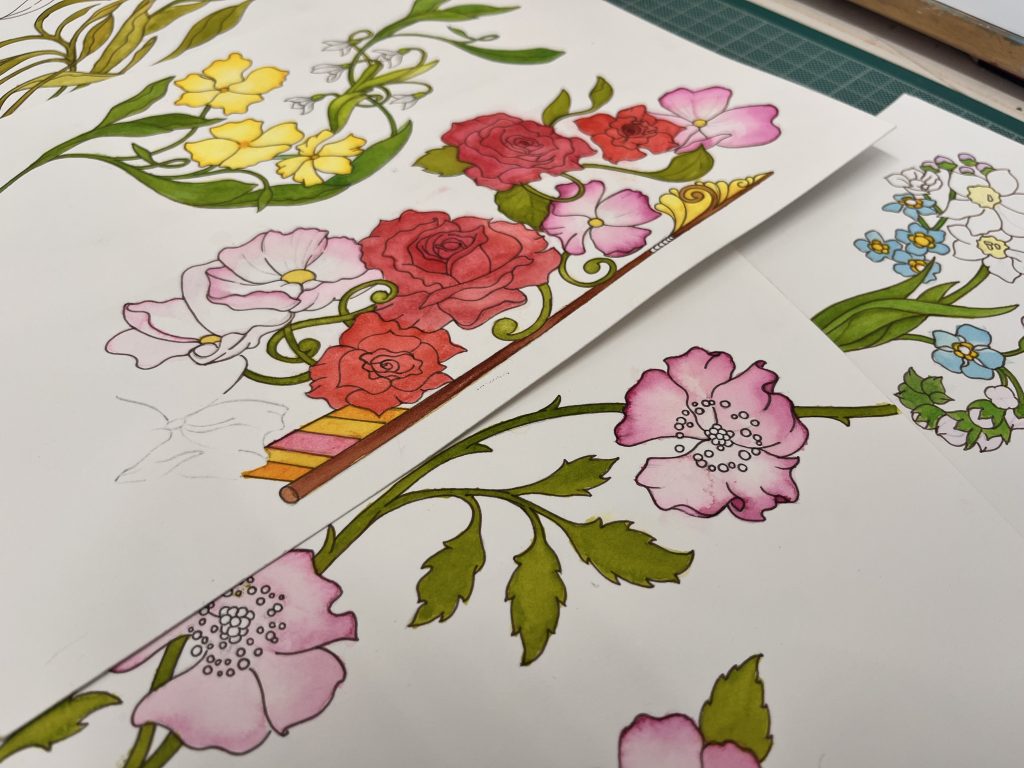
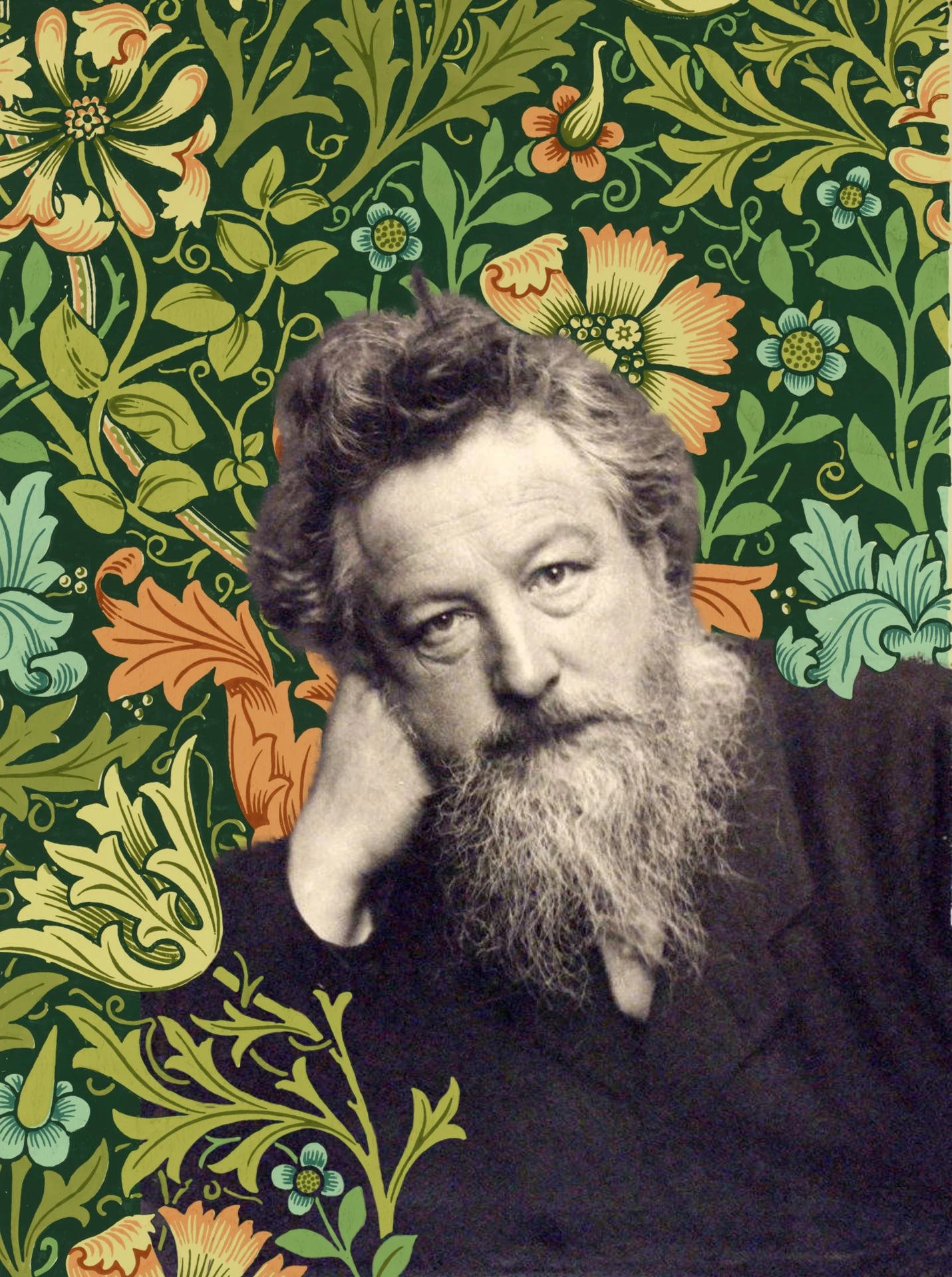
While developing my Seven Woods pattern collection for my book; created in tribute to the Yeats sisters, I’ve found myself learning a little about William Morris.
Lily and Elizabeth both trained and refined their skills in printmaking and embroidery within Morris’s creative circle. Lily studied under his daughter May at Morris & Co., while Elizabeth was encouraged by Morris’s close associate, Emery Walker, to join the Women’s Printing Society.
I suppose if I’m going to be involved with pattern design, it’s only inevitable that I’m going to encounter William Morris sooner or later.
The more I learn about him, the more fascinated I become about his ideals and philosophy, his views on beauty and craftsmanship and the role of art in everyday life.
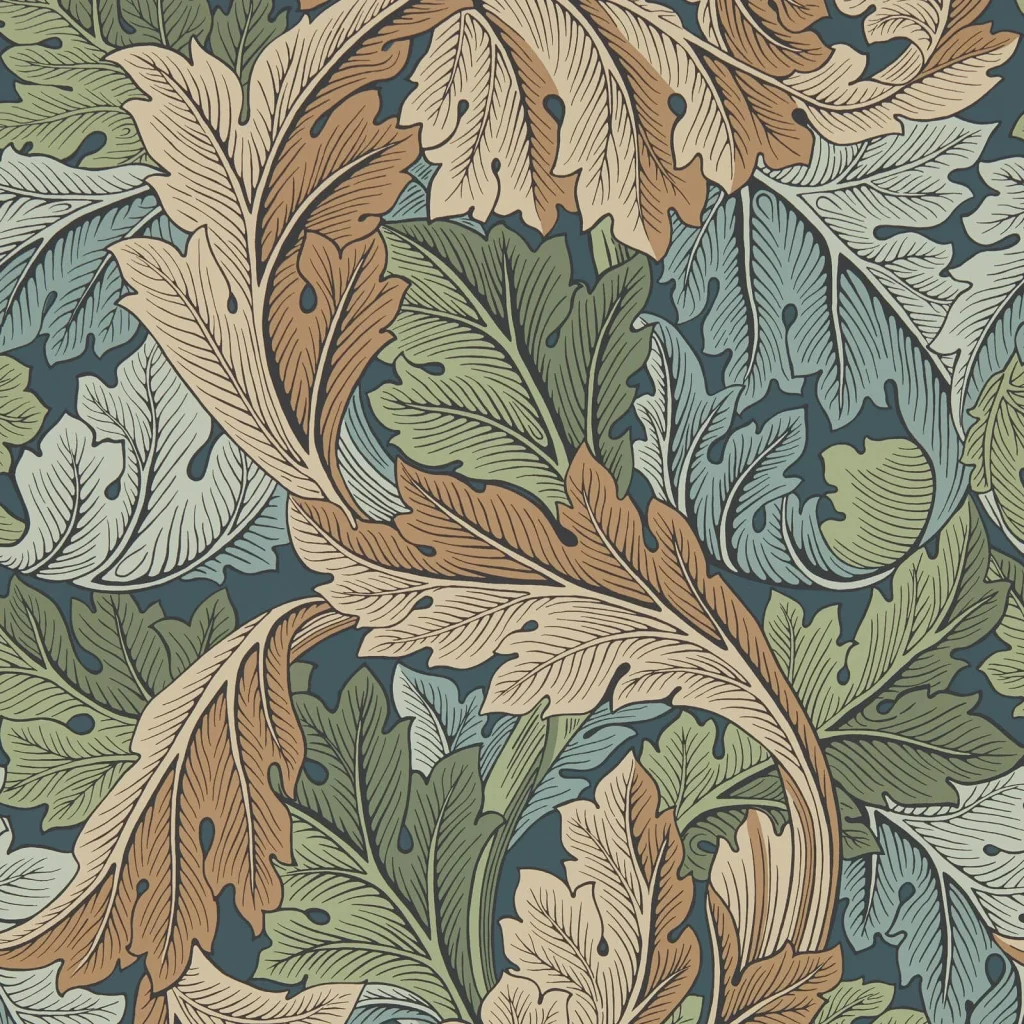
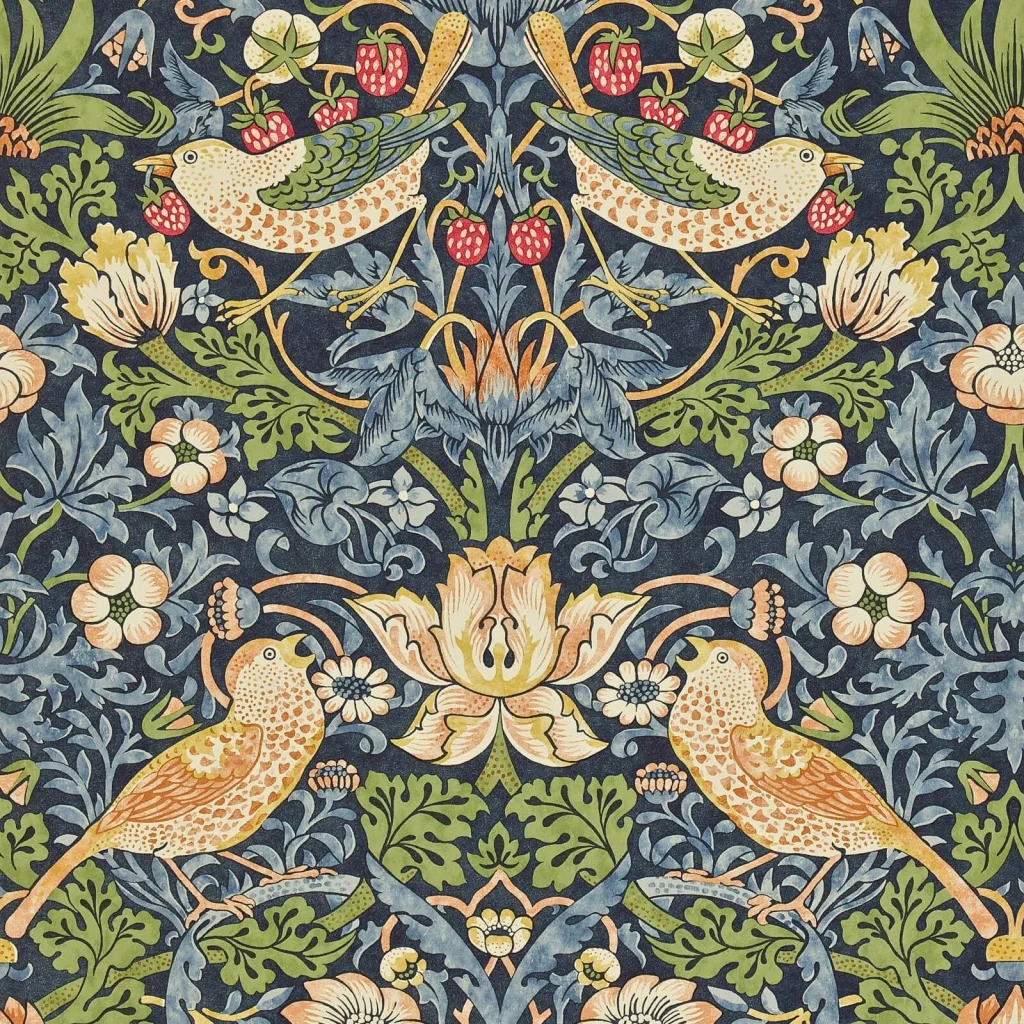
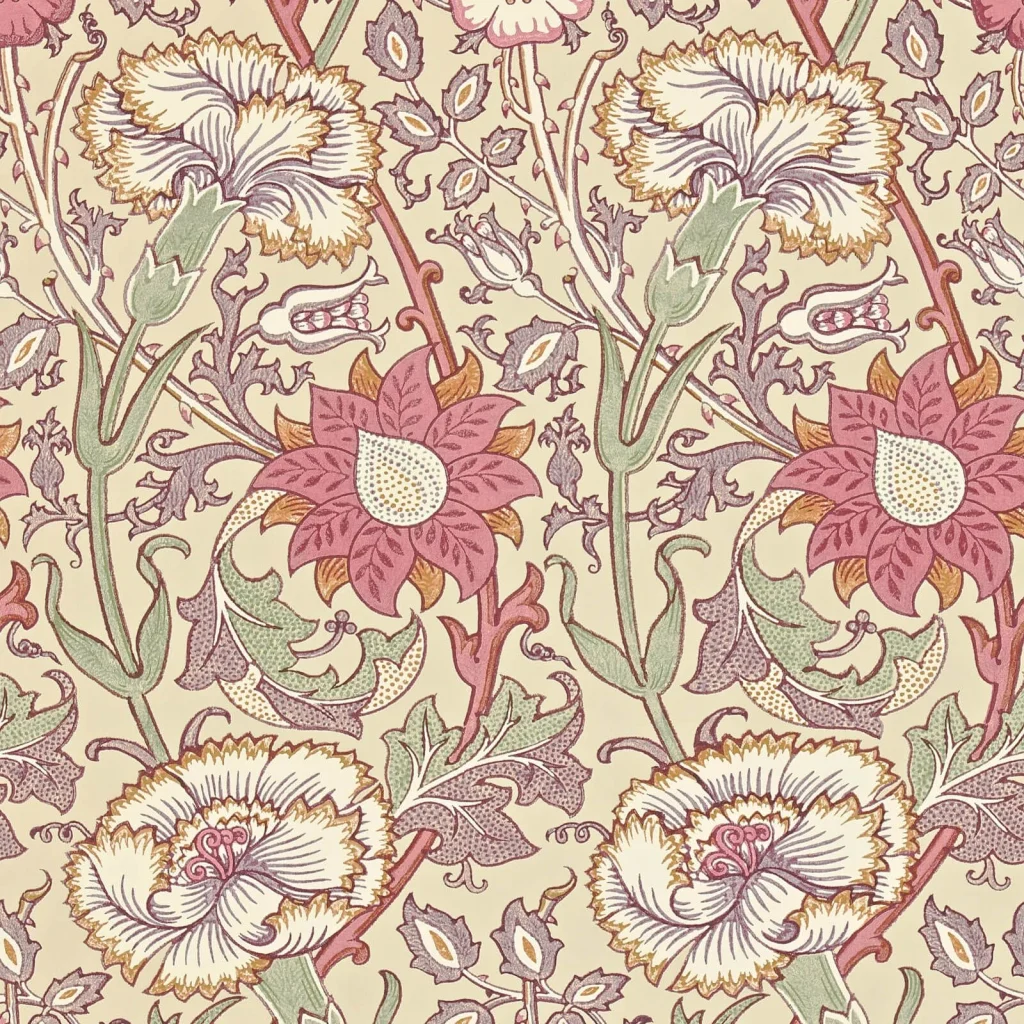
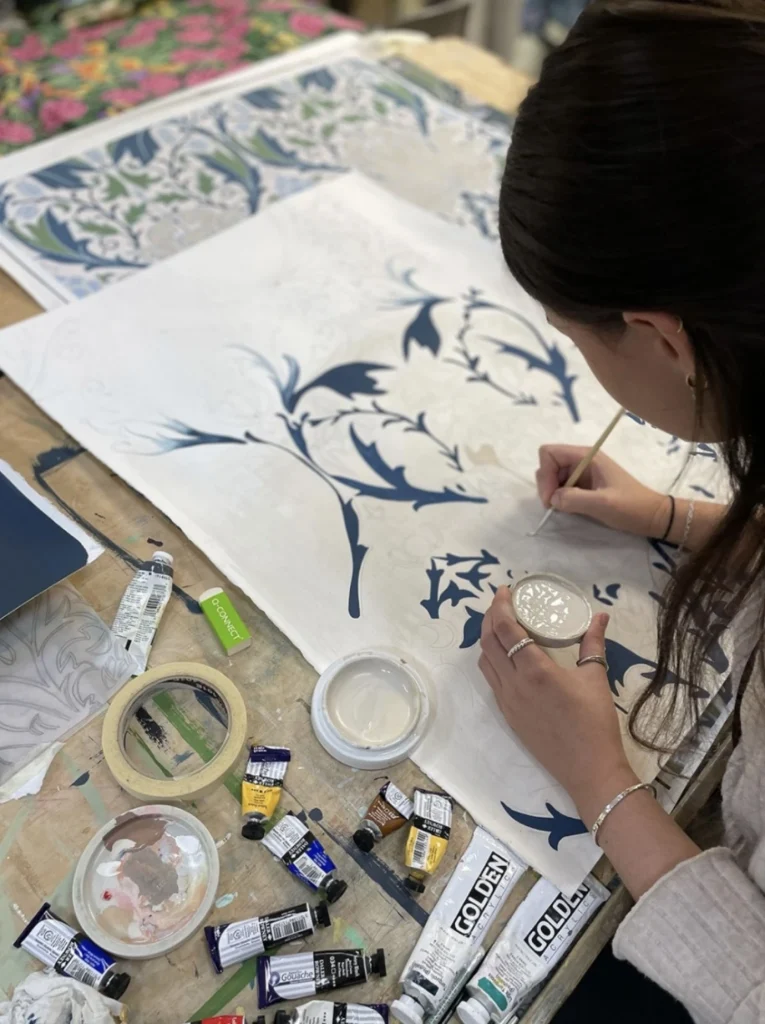
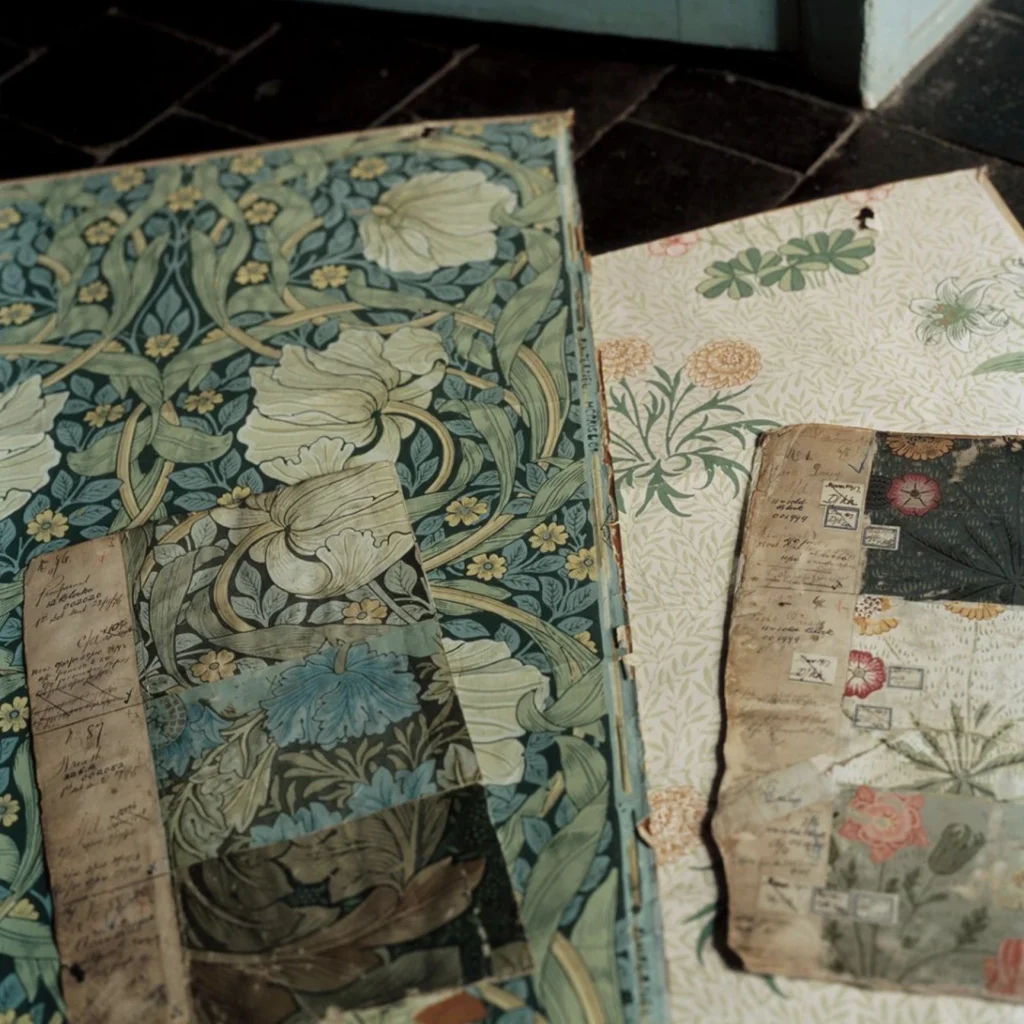
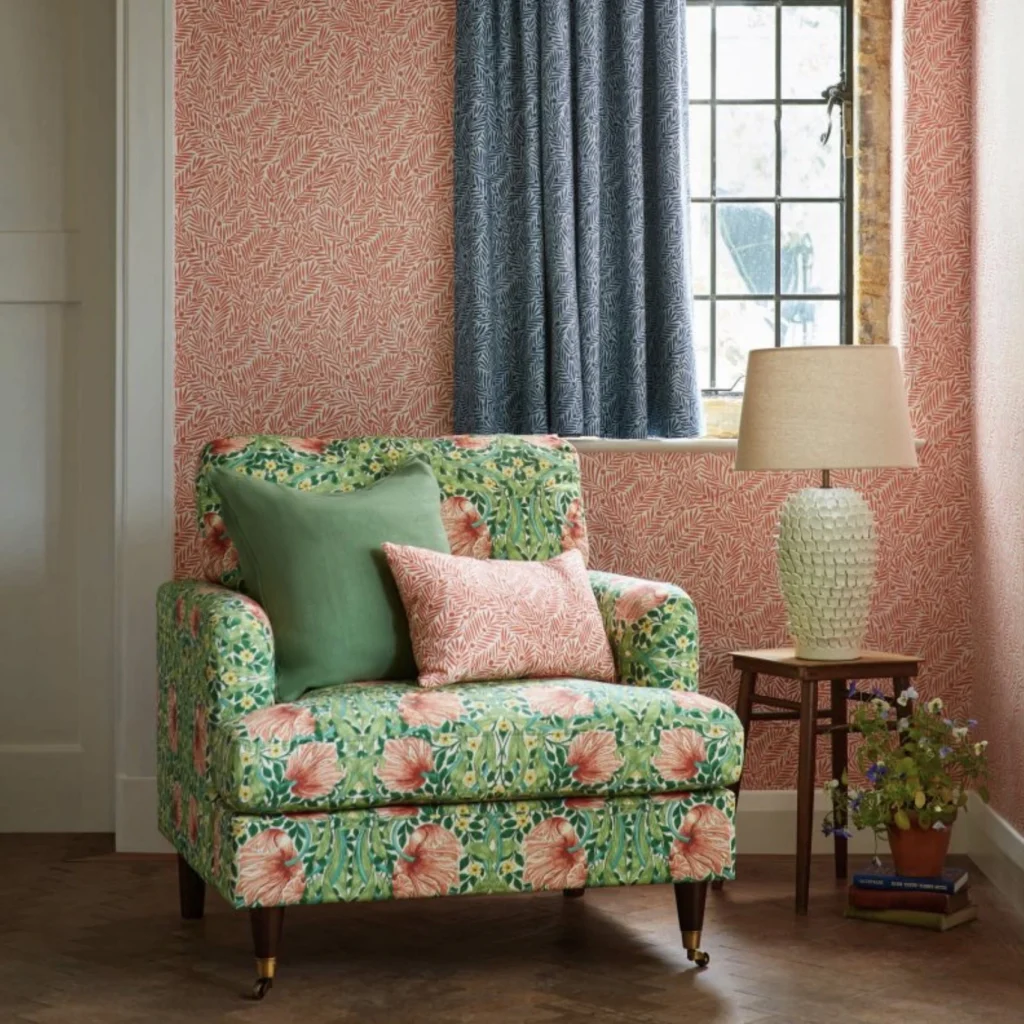
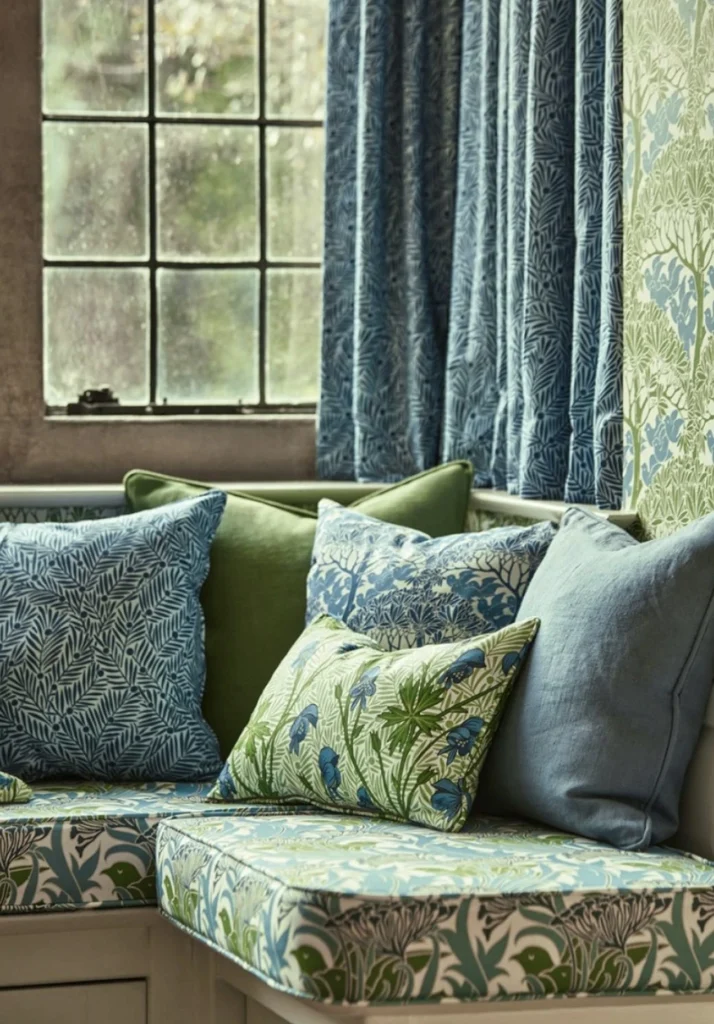
In reading about him, I discovered just how deeply he rejected industrialisation, seeing it as a force that produced a kind of moral ugliness. Morris championed craftsmanship; the creation of beautiful things made with care, skill, and love for the natural world. He believed mass production alienated workers from the joy of making, polluted the environment, and filled the world with meaningless things.
In his utopian novel News from Nowhere (1890), Morris imagined a future society living in harmony with nature, where money had been abolished and industry replaced by co-operative craftsmanship. It was an eco-socialist vision in which art, labour, and daily life were unified.
I suspect he would be devastated to see the world we inhabit today, dominated by hard-core capitalism and neoliberalism. The scale of modern mass production, with its exploitative labour practices and plastic pollution, would surely break his heart. And yet, therein lies a poignant irony.
Although the work of William Morris has been in the public domain since the late 1960s, its recent commercial resurgence has companies around the world reproducing his designs across endless stationery and home décor. His work, once a protest against industrial mass production, has itself become mass-produced.
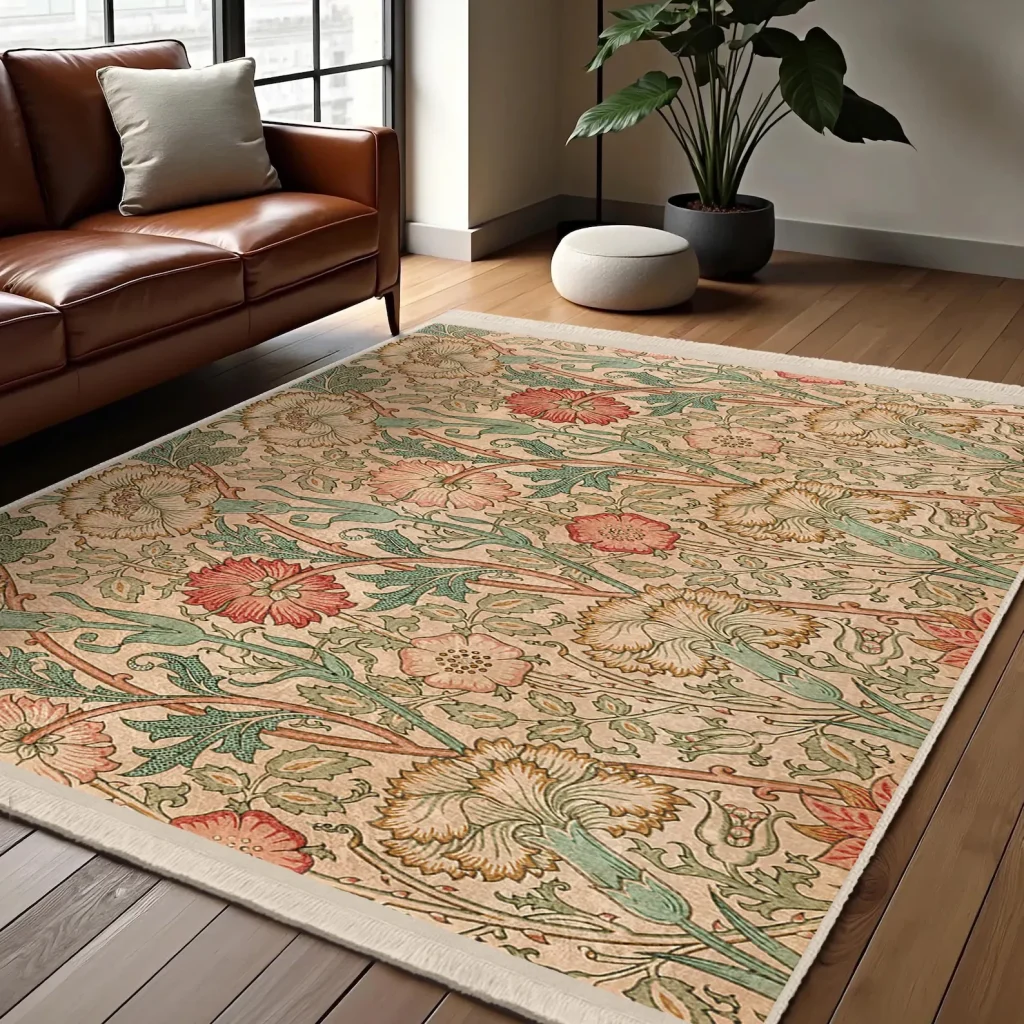
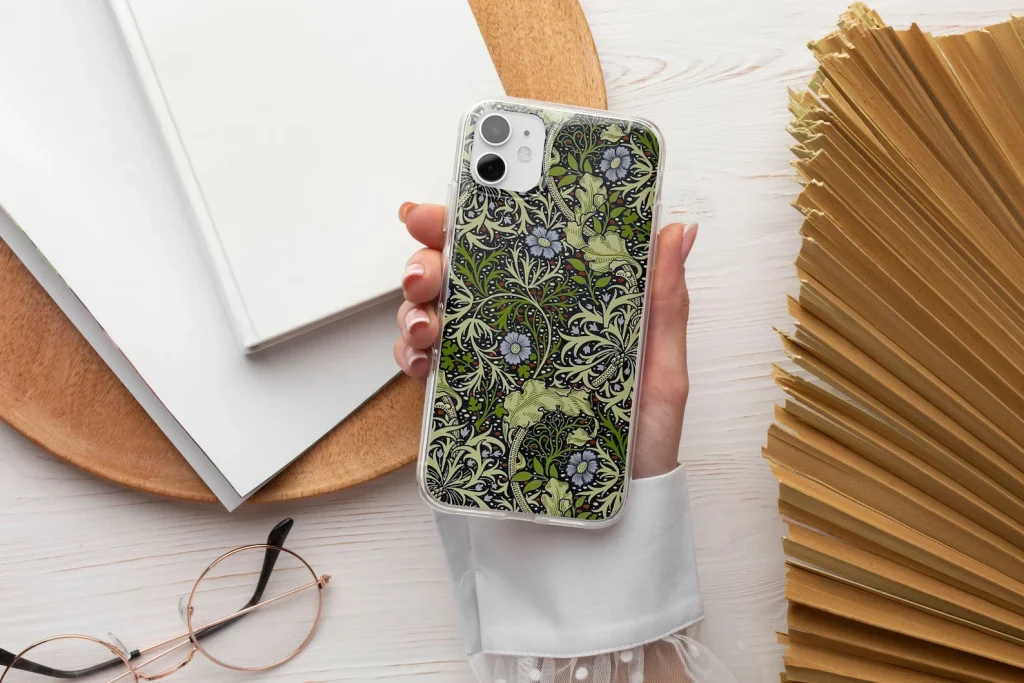
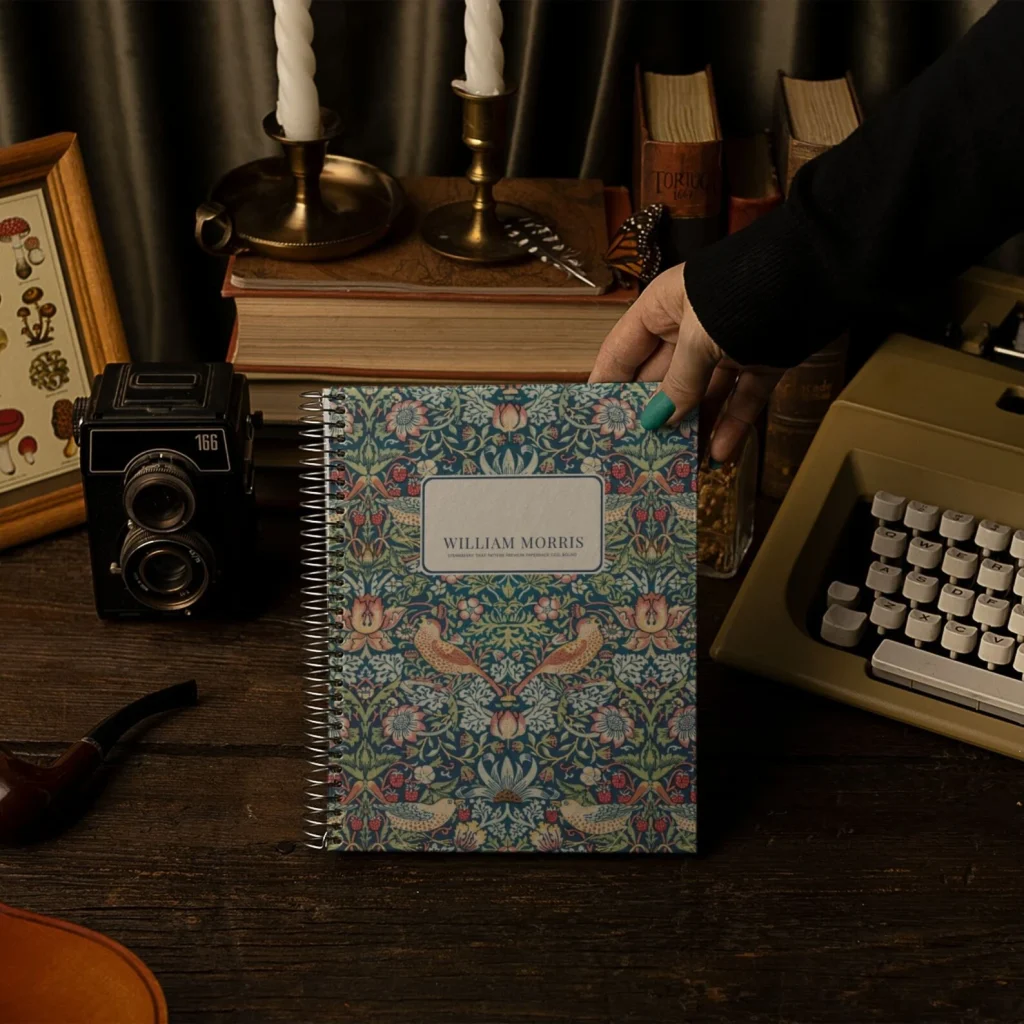
This brings me to creativity today and the rise of AI. Since 2024 many creatives have been concerned with AI and the possibility of it replacing creative jobs, which is an understandable concern.
In truth, the businesses most eager to use AI for creative work are often ones that never truly value artists to begin with; the ones that prefer paying in “exposure” than actual, feasible payment for an artists time and creative skill.
However this past year there’s been a strong backlash from art directors toward AI-generated artwork. Many of them request in their contracts with artists that no AI generated content be used, and that’s really encouraging.
Another encouraging thing is how many creatives have been returning to analog processes and cutting back with digital work. Imperfection is being embraced again: uneven lines, messy marks. There is renewed joy and appreciation in making and seeing human hands and imagination involved in the artwork; and that enthusiasm is being shared by art lovers, art directors, and educators alike.
So where does William Morris fit into all this?
I guess what I’m trying to get at is… before AI, we took our creativity for granted. And now, in a weird turn about way, the dawn of AI has made us re-evaluate our connection with creativity and appreciate the thing that Morris advocated so much in the past. Craftsmanship.
The human ability to create beautiful things, made with intention and a story to tell. Anything made with heart transcends, it’s going to touch people emotionally & psychologically and that part is really important.
When we’re in the presence of something built with heart and integrity, whether we know it or not, it affects us. Be it a beautiful building, a swirling staircase, a hand-bound linen journal. Good design is rarely noticed outright, but it is always felt.
Is it possible that the presence of AI will bring about a new renaissance? The kind William Morris envisioned with co-operative craftsmanship?
It’s not completely in the way Morris imagined. It’s unlikely we’re going to abandon industry. Mass production is the reality of modern times and as for AI? Well that’s a genie not ever going back in the bottle. So perhaps the real opportunity here lies in changing how we approach it.
And maybe that is where Morris still guides us today; toward a future where even the most widely produced objects can still be made with integrity through craftsmanship, thoughtful design and a lot of heart.
Other Articles…

Doorly Park
The 1960’s and why I would go there if I had a Time Machine
Granny Takes A Trip
From Persia to the Counter-culture & Beyond The Story of the Paisley Motif
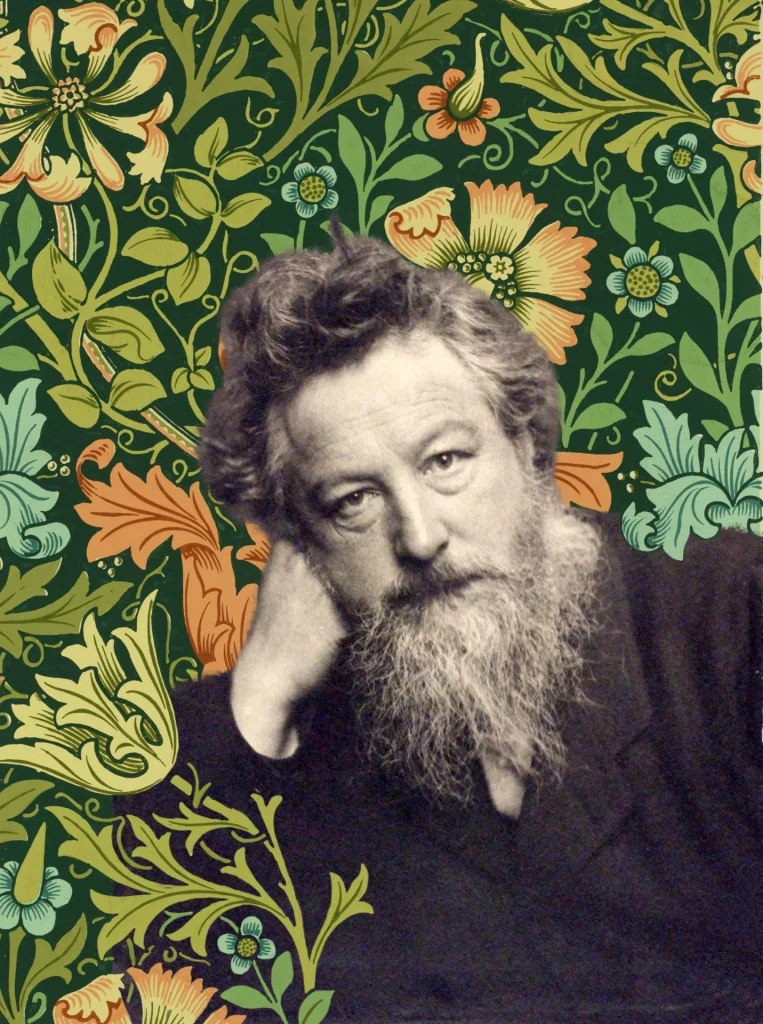
Embracing the Ideals of William Morris in the Age of AI