“That I may, that I may, wear my love like Heaven” – Donovan
It’s 2016 and I’m in a men’s clothes store helping Arden pick out a suit for my sisters wedding. We are shown a selection of ties, all quite lovely but there’s one tie I spot that stood out from the rest. It was covered in purple with a slight shimmer and in paisley pattern. It carried all the bohemian charm of the 1960’s but it was elegant and sophisticated. Naturally I nudged Arden to get it, he didn’t argue, he 100% agreed, clearly this was the coolest most beautiful tie in the bunch!
For as long as I’ve known, the paisley motif has always been associated with hippy or bohemian culture. Usually when people see it in a pattern they think Woodstock & peace signs. But ever since getting into pattern design, I’ve been learning so much about the history and origins of pattern styles. The paisley pattern is a particularly interesting one I had a lovely surprise learning about.
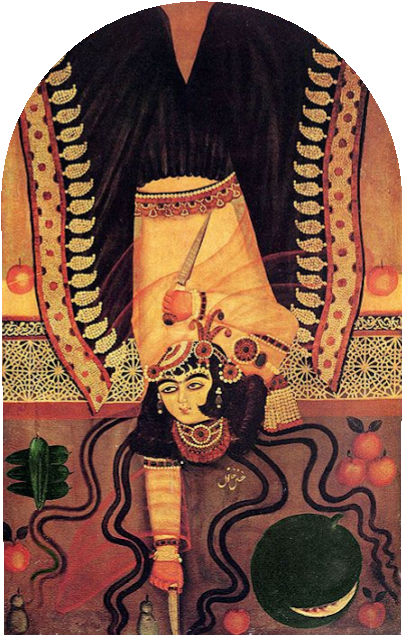
To begin, it was never a design created in the sixties for “hippy fashion”, it’s a motif with ancient roots that has spanned the centuries and continues to be used in the fashion world to this day.
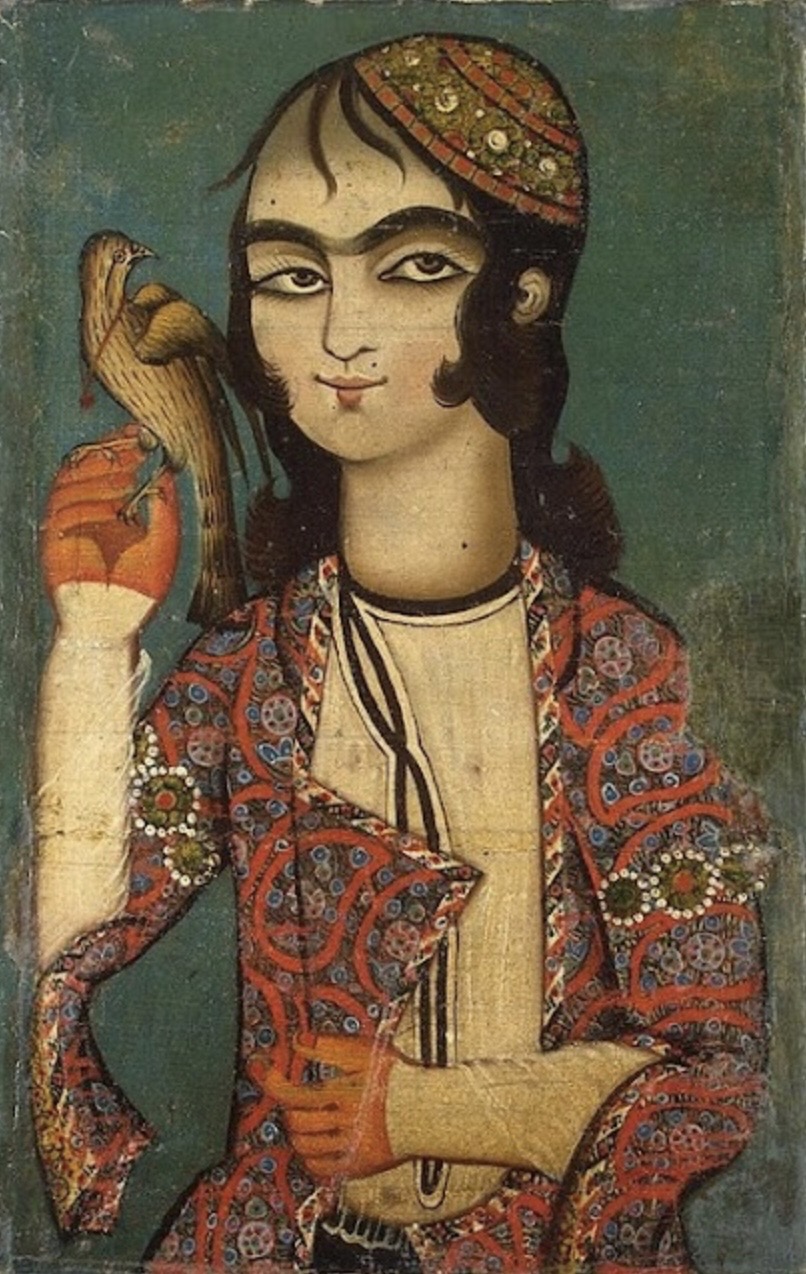
Its origins stem from Ancient Persia and was originally known as the Boteh, a Persian word meaning shrub, bud, or cluster of leaves. Visually, the Boteh is a curving teardrop or almond shape, often with a pointed tip, sometimes compared to a flame or a seed, even a bent cypress tree, which was sacred in Persian culture.
The Boteh was regarded as something symbolic, representing life and eternity, because of its organic, seed-like form. Strength and resilience for its likeness to the cypress tree, and also connected to spirituality and the divine flame. Boteh motifs were found in Persian carpets, manuscripts, and textiles, often woven in silk or wool with intricate borders and lush, flowing repetition.
Well this all sounds lovely and tranquil, but like any good Pixar movie this motif was about to go on a journey, one that will mirror the cultural complexities of empire; appropriation, admiration, and reinvention. Okay maybe Pixar movies don’t tell that kind of story but there’s definitely upheaval and adventures.
In around the 16th century, the Boteh traveled east to Kashmir, in northern India, likely through trade and cultural exchange between Persian and Mughal courts. There, it evolved into the Kashmiri shawl design, woven from fine pashmina wool.
These shawls were handwoven and incredibly labor-intensive, often taking months to complete, and richly coloured with natural dyes. It was in Kashmir that the Boteh became more elongated in its shape and ornate, merging with floral and vine-like motifs from Indian decoration. It was also associated with royalty and status, worn by Mughal emperors and aristocrats.
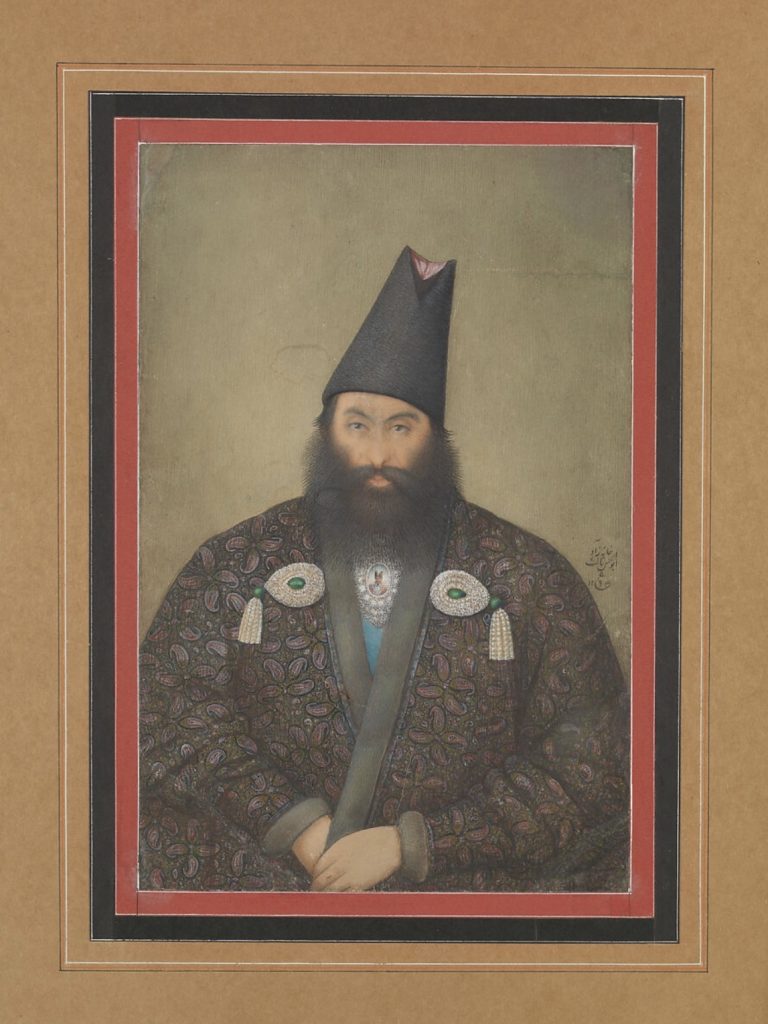
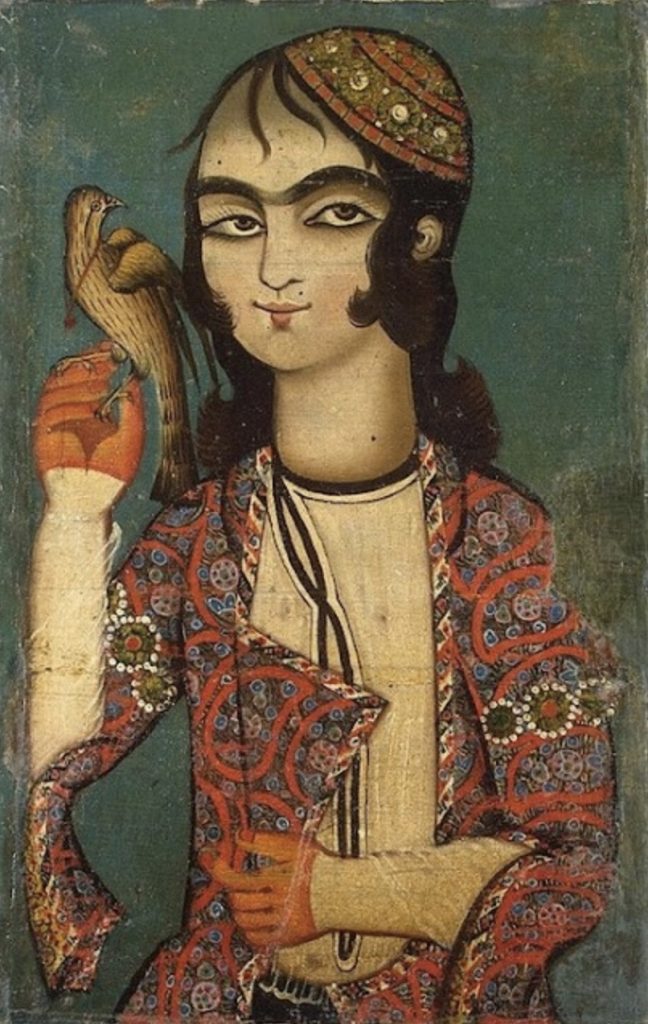
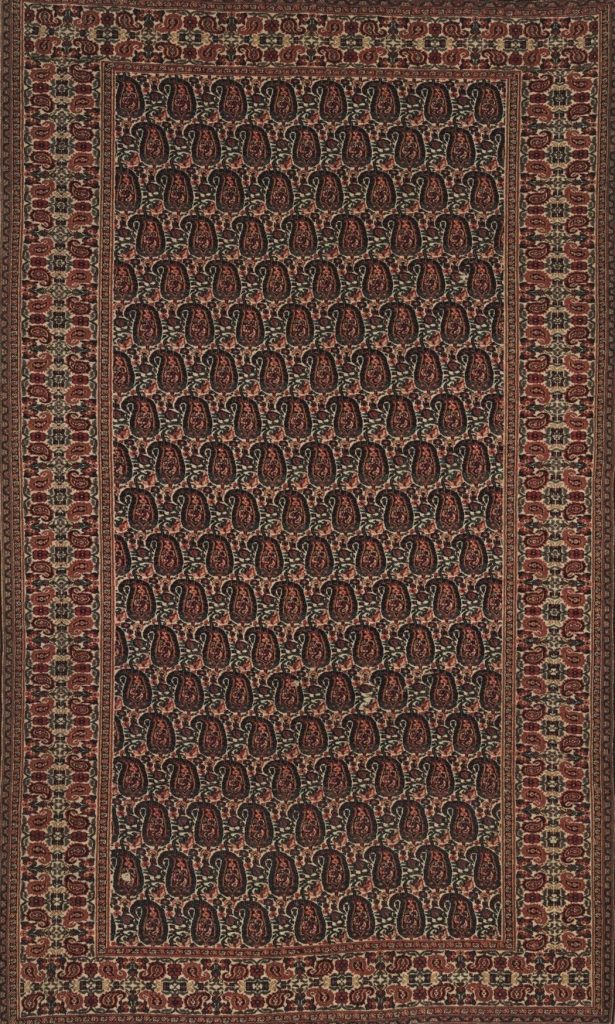
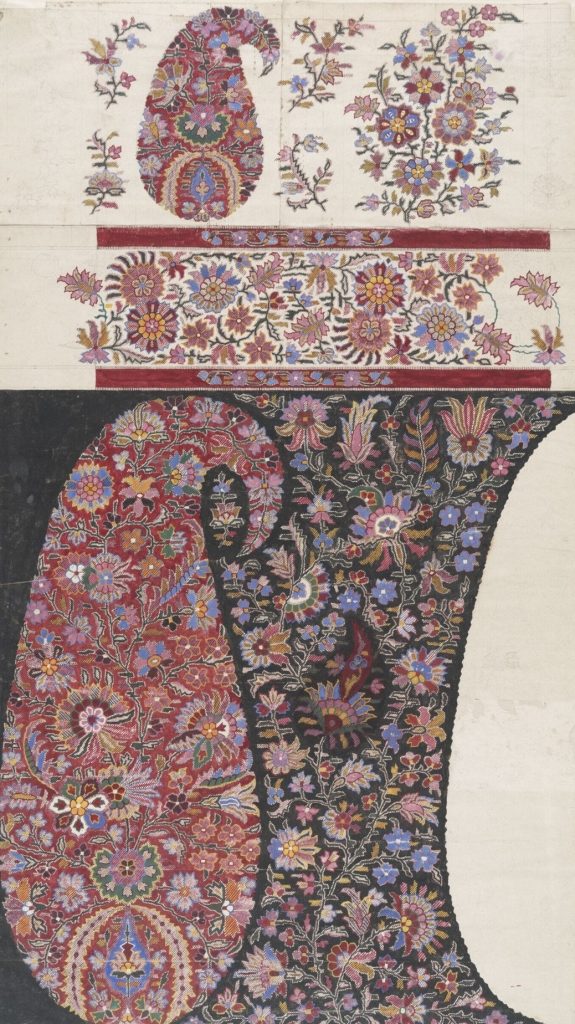
By the 18th and 19th centuries, these Kashmiri shawls became luxury items in Europe. They arrived via trade routes operated by the East India Company. If it’s one thing I’ve learned much of through the history of pattern design, it’s colonialism!
The Boteh’s origins were Eastern, but it was to become a distinctive feature of Victorian fashion, worn by women across Europe as a sign of sophistication and worldliness.
However, true Kashmiri shawls were incredibly expensive and slow to produce, plus there was the arduous journey East to trade goods, which alone took months. So European textile manufacturers, like with many eastern pattern styles, began trying to imitate them.
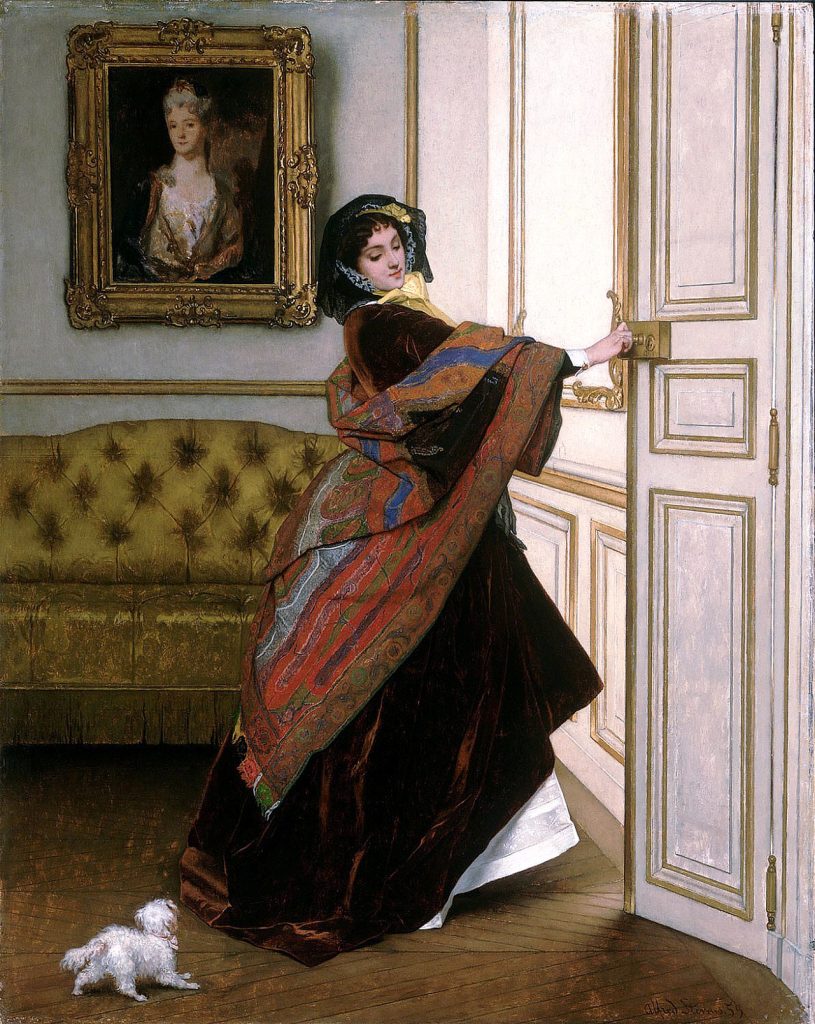
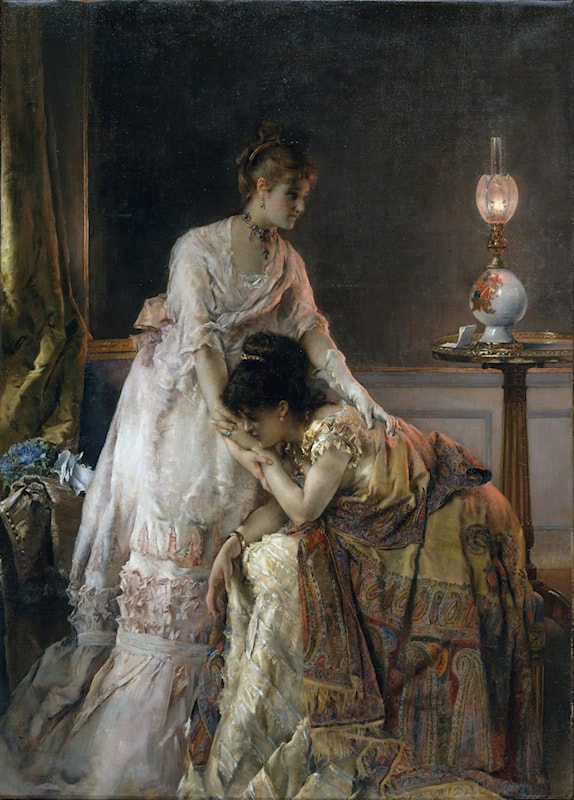
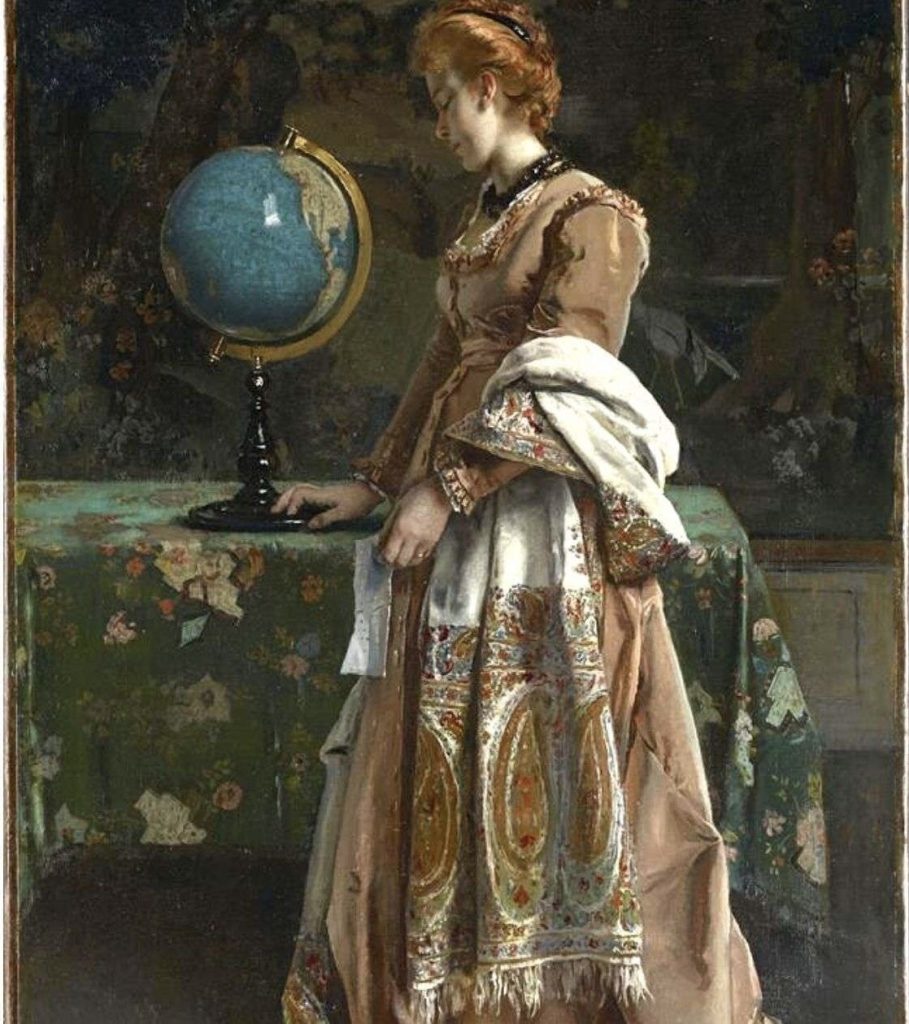
These paintings are by Alfred Stevens (Alfred Émile Léopold Stevens) a mid to late 19th Century Belgian painter, renowned for his luminous depictions of fashionable women in the 1860s. I especially admire the way he beautifully captured the fashion and interior décor of his time with such detail. Notice the Kashmir scarves with the Boteh/Paisley motif.
By the early 1800s, (and this is the big reveal) the Scottish town of Paisley, (hint, hint,) near Glasgow, became a major centre for weaving these imitation shawls, hence the name Paisley Pattern. Don! Don! Don!
Paisley weavers adapted the Boteh motif to new technologies like the Jacquard loom, allowing more complex and colourful designs. The town produced so many of these shawls that the pattern itself became synonymous with “Paisley,” overshadowing its Persian and Indian origins, coz you know, colonialism!
Here the Boteh evolved its shape again, this time the Scottish interpretations made the shapes more densely packed, symmetrical and repetitive, often rendering in bright, industrial dyes rather than natural pigments.
*The Jacquard machine is a device fitted to a loom that simplifies the process of manufacturing textiles with such complex patterns. The resulting ensemble of the loom and Jacquard machine is then called a Jacquard Loom. The machine was patented by Joseph Marie Jacquard in 1804.
During the early part of the 20th century, industrial production grew and the popularity of the paisley pattern faded, possibly due to the innovative fresh styles of Art Nouveau and the Arts and Craft Movement.
But it wasn’t until the 1960’s & 70’s that the Paisley/Boteh pattern made a major comeback in psychedelic fashion and rock culture.
Why was the paisley pattern so popular during this time? I’d imagine it would have something to do with the fascination in Indian spirituality during this time and “The Hippy Trail”. Thousands of young Western traveler’s who went on a journey of spiritual awakening and self discovery to India & Nepal, often passing through Turkey, Iran, Afghanistan, and Pakistan.
In a sense the Paisley/Boteh came full circle during this time, returning to its roots essentially? Just like in a Pixar movie!
During the sixties it became a symbol of rebellion and free expression; an emblem of East-meets-West that defined the era. No longer a mark of empire or luxury, it became a badge of individuality and creative freedom.
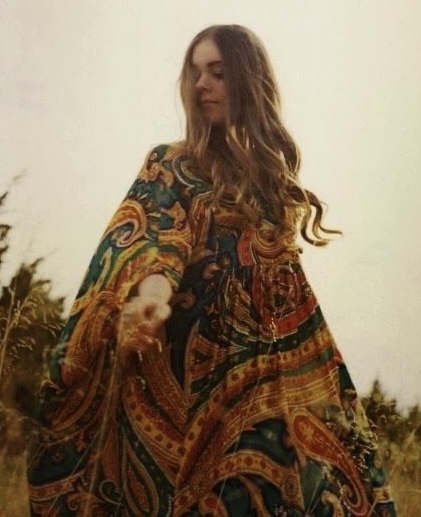
Few designs have lived as many lives as the Paisley/Boteh motif. From ancient Persia to the bohemian 1960s, the curving teardrop has crossed empires, technologies, and countercultures, carrying with it a story of beauty, belief, and adaptation.
The Paisley/Boteh has become a cultural traveler, woven, traded, and reinterpreted for centuries, each iteration a reflection of its time. Today, the Paisley/Boteh motif still thrives, on textiles, wallpapers, tattoos, even on fancy purple ties to wear at weddings.
Its endurance speaks to its adaptability and its universal appeal. In every iteration, be it Persian, Kashmiri, Scottish, or psychedelic, the Paisley/ Boteh carries the same heartbeat: A celebration of life’s flowing, repeating, and ever-evolving beauty.

Other Articles…

Doorly Park
The 1960’s and why I would go there if I had a Time Machine
Granny Takes A Trip
From Persia to the Counter-culture & Beyond The Story of the Paisley Motif
Embracing the Ideals of William Morris in the Age of AI